Welcome to Texture Matching Service!
Get a free quote today!
Get Your Free Quote


The Art & Science of Texture Matching
Texture is the fingerprint of your home. Matching it requires more than guesswork—it requires the right physics. We use professional pneumatic equipment to replicate your wall's unique pattern density and depth for a seamless repair.
The Equipment Matters
You've seen bad patch jobs—a smooth wall with a blob of texture that looks completely different from the rest of the room. That happens when contractors use aerosol cans or cheap hand-pump hoppers.
The Hidden Danger of Aerosols:
Many of these spray cans use an oil-based formula. This creates a permanent shiny spot that "flashes" or bleeds through your final coat of paint. No matter how many times you paint over it, that shiny patch remains visible, ruining the finish forever.
We Match the Mechanism to the Job.
For Repairs: The Laco M1000
For patches and repairs, we use the Laco M1000. This is a professional-grade gun that mimics the spray pattern of a commercial rig but in a compact size. It allows us to adjust air pressure and material flow infinitely. We can "dial in" the exact droplet size of your existing Orange Peel or Knockdown to make the repair invisible.
For Hand Finishes: Custom Tooling
Skip trowel, stomp, and swirl textures are art forms. We fabricate custom tooling in-house to match historic or unique hand-finishes that you can't buy off the shelf at a hardware store.
How We Make the Patch Disappear
Matching texture on a repair is much harder than texturing a new wall.
01. Reading the Wall
Before we spray, we analyze your existing texture. Is it a heavy, medium, or light Orange Peel? Is the Knockdown flattened heavily or lightly? We determine the "droplet size" and "density" required to match.
02. The "Feathering" Technique
The biggest mistake amateurs make is stopping the texture right at the edge of the patch. This creates a visible ring. We use a feathering technique, lightly spraying our texture 12-18 inches past the repair area. By gradually fading the new texture into the old, we fool the eye so it cannot see where the repair starts and ends.
03. Dialing In the Pattern
Using our Laco M1000, we test the spray pattern on a piece of cardboard or plastic first. We adjust the air pressure (PSI) and nozzle size until the droplets match your wall exactly. Only then do we touch your wall.
04. Timing the Knockdown
For Knockdown textures, timing is everything. If you wipe it too soon, it smears. Too late, and it won't flatten. We watch the texture closely as it flashes from "wet/shiny" to "dull/tacky." We use a flexible blade to gently flatten the droplets, mimicking the exact profile of the surrounding area.
The Science Of Specific Textures
Every texture has a specific formula. Here is how we break down the two most common types:
Orange Peel
This looks like the skin of an orange. It is created by spraying mud at high pressure without wiping it down.
The Challenge
Matching the "splatter size." Old Orange Peel might be fine and tight; new Orange Peel tends to be larger and rounder.
Our Solution
We adjust the viscosity (thickness) of our mud and the air pressure of our gun to replicate the exact year your home was built.
Knockdown
This looks like flattened islands of texture. It is sprayed on, allowed to set, and then wiped flat.
The Challenge
The "Directional Drag." When the original finisher wiped the wall, they dragged the blade in a specific direction (up, down, or sideways).
Our Solution
We study the "grain" of your existing texture and mimic the original blade angle and pressure to ensure the reflection of light is identical.
How We Make the Patch Disappear
Matching texture on a repair is much harder than texturing a new wall. On a new wall, you just need consistency. On a repair, you have to match the "DNA" of the existing wall perfectly.

01. The "Bullseye" Effect
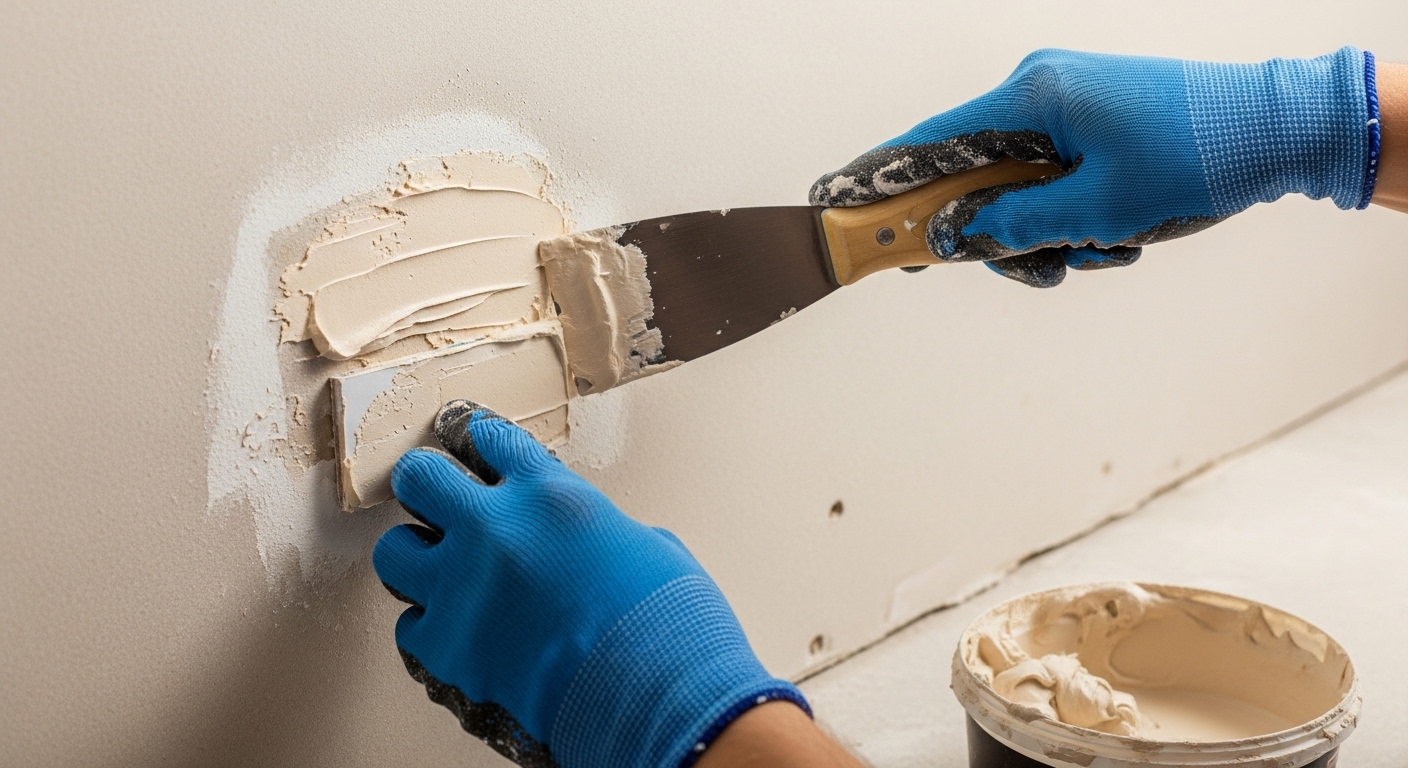
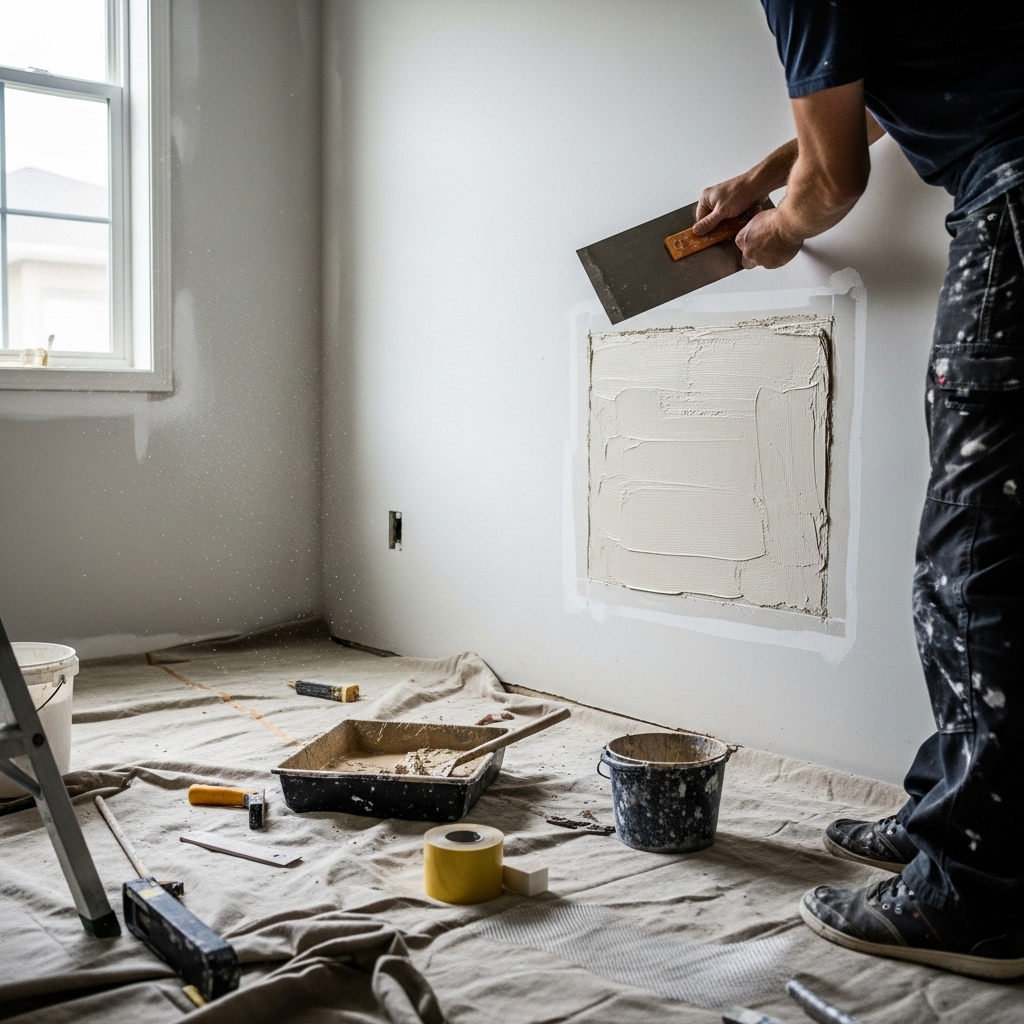
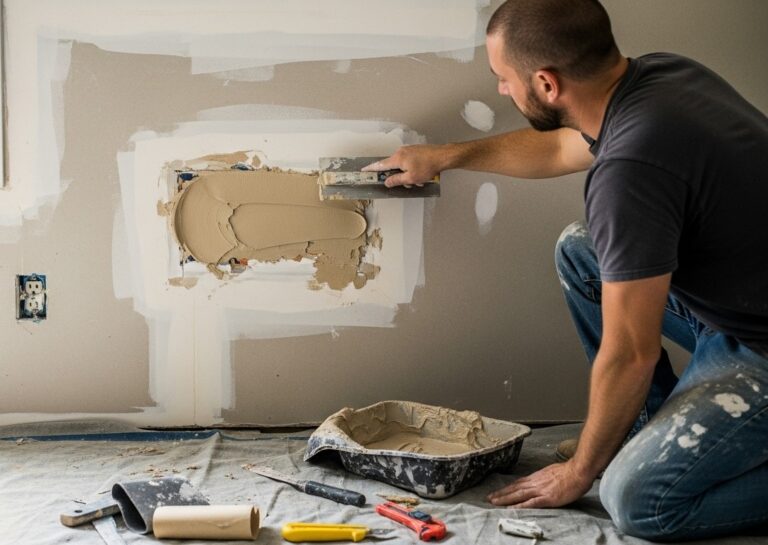
We don't just slap mud over a hole. We cut the damage out squarely, install rigid wood backing, and screw in a new piece of gypsum board. This ensures the repair is structurally sound and never cracks.
02. Texture Drift
Cheap hopper guns lose pressure as the trigger is held down, causing the texture pattern to change from small to big in the middle of a spray. Our pneumatic Laco tools maintain constant pressure for a uniform pattern.
03. Painting Too Soon (The "Melting" Effect)
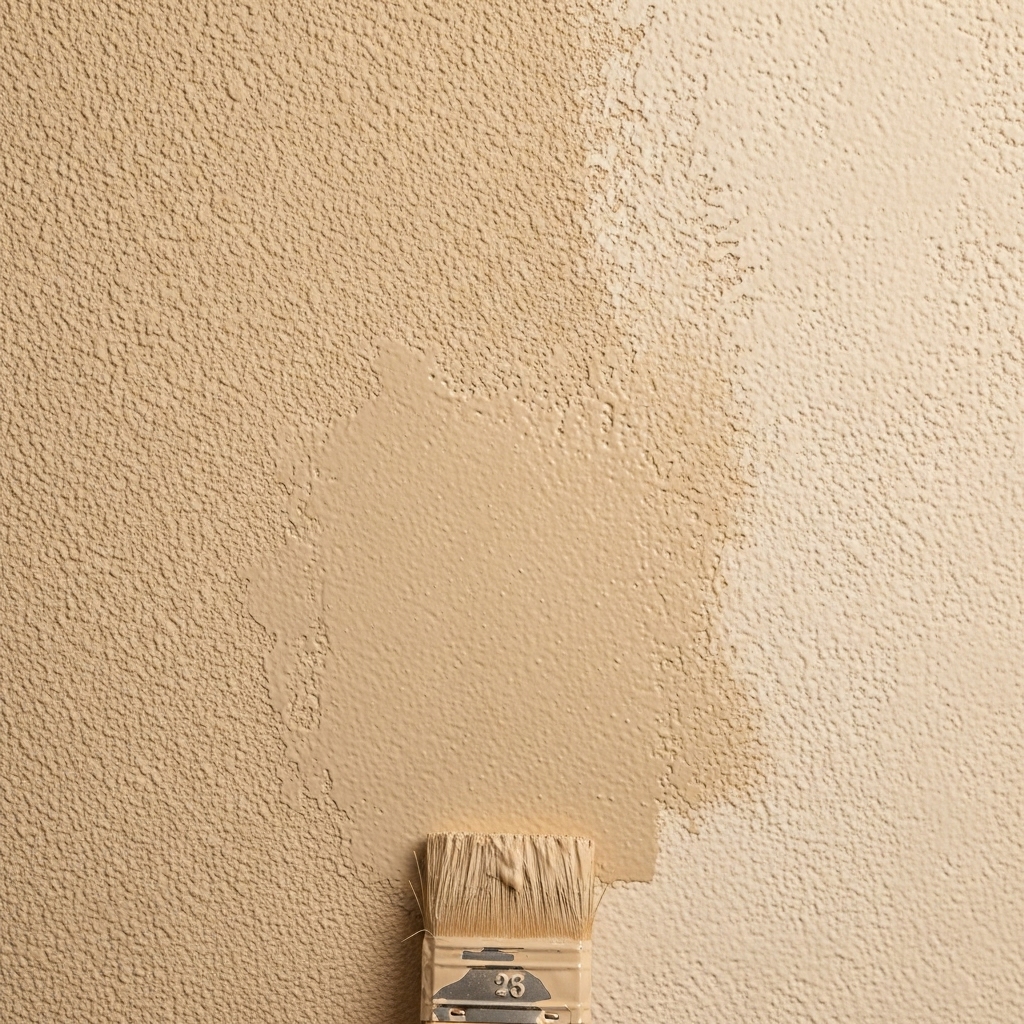
Texture is water-soluble until it is primed/painted. If you roll paint over fresh texture before it is 100% cured, the texture will soften and smear, ruining the pattern. We advise a strict 24-hour cure time for all textured repairs.
Textures We Specialize In
Knockdown
The "California" look. Mottled texture that is sprayed and then flattened.
Skip Trowel
An elegant, hand-applied finish common in high-end homes.
Orange Peel
A subtle, bumpy texture that hides imperfections.
Smooth (Level 5)
The modern standard. Requires the highest level of skill to execute perfectly.
FAQs About Texture Matching
Still have questions? Contact us.
My texture is painted over many times. Can you match that?
Yes. Layers of paint tend to “soften” or round out the texture. When we spray new texture, it can look too crisp or sharp compared to the surrounding wall. We use a specialized sanding technique on the dried texture before painting to mimic years of paint build-up, ensuring the new patch doesn’t look “too new.
Do I need to prime the texture before painting?
Absolutely. Fresh texture is extremely porous (like a sponge). If you apply paint directly to it, the drywall will suck the moisture out of the paint, leading to a dull, uneven sheen (called “flashing”). You must use a high-quality PVA drywall primer to seal the texture first.
